
Homemade Grout Cleaner
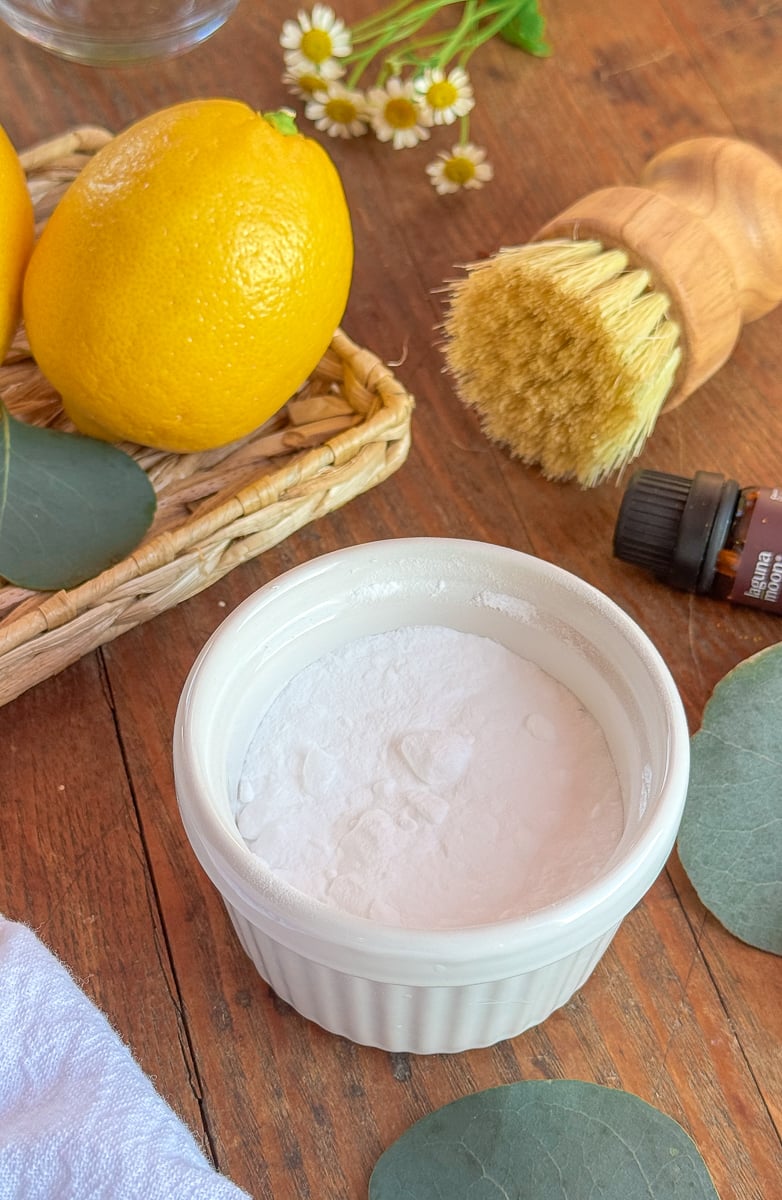
Oh boy, do I have an awesome Homemade Cleaner for you guys today! It is a little crazy how excited I am about this homemade solution, but let me tell you I think I have tried every bathroom cleaner on the market in North America.
If you have young boys at home, you are probably very aware of the daily struggle to keep your bathroom smelling fresh. Many cleaners available don’t really do an effective job of cleaning “boy bathroom smell”. I would clean my bathroom from top to bottom only to find now my bathroom smells like a combination of a truck stop with a hint of a summer meadow, definitely not what I was going for. So, when I stumbled upon this recipe for Homemade Grout Cleaner I was definitely intrigued, but still kind of skeptical.
If you are new to making your own homemade cleaning products essential oils will likely be your biggest investment, but it is not a purchase you will have to make frequently! My suggestion when just starting out with homemade cleaners is to get Eucalyptus oil, Tea Tree oil, lavender oil, and a citrus oil you enjoy the scent of. You can expand your oil collection later, but these will pack the most antibacterial, antiviral, antifungal and antiseptic properties for your budget. Also, don’t get caught up in the lure of expensive oils, there are high-quality essential oil brands that are reasonably priced available both online and off. My favorite “starter kit” of essential oils is available on Amazon the Pure Therapeutic Grade Basic Aromatherapy Sampler Essential Oil Gift Set- contains 10 ml each of Eucalyptus, Lavender (Bulgarian), Lemon, Peppermint, Sweet Orange and Tea Tree by Edens Garden for around $39.
This Homemade Grout Cleaner contains baking soda, a known odor absorbent, vinegar a good deodorizer, and tea tree oil which has a pleasant fresh scent that is similar to peppermint or eucalyptus. I knew this recipe had potential. But when I actually used it, I was amazed. All boy bathroom odors were neutralized, not covered with artificial scents of mountain breezes, and spring rain. All smells were and still are GONE. All that lingered was a faint tea tree oil scent, which is similar to eucalyptus.
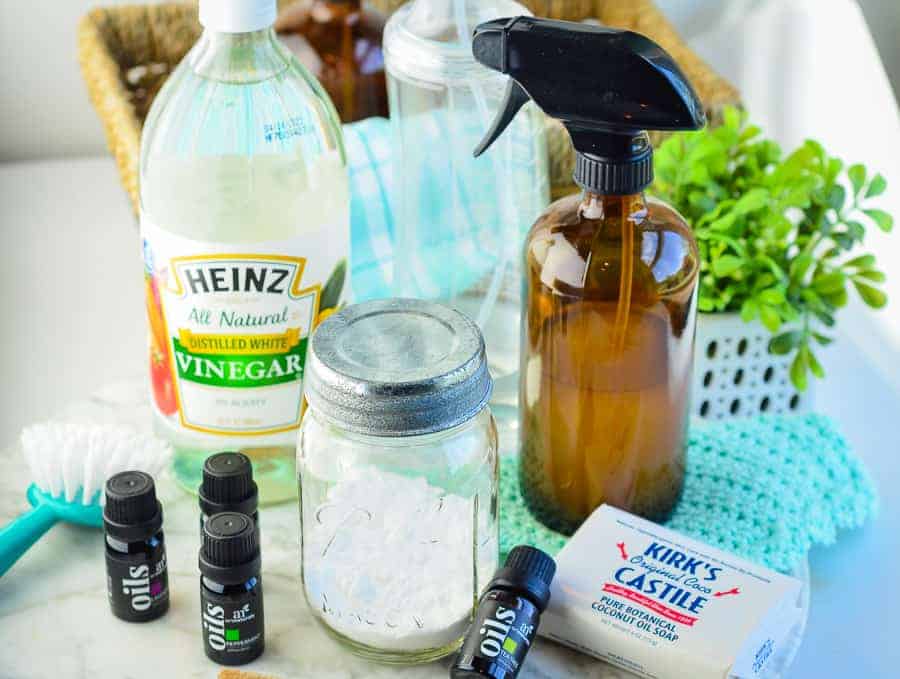
Ready to mix up your own? It is super easy, but there are a few things to keep in mind. Remember in 6th-grade science and acid-base reactions? Yeah, you are going to want to mix your baking soda and vinegar in a big bowl. Once the baking soda and vinegar reaction settles down, and all the ingredients are stirred in you will be left with a loose paste (think soft-scrub cream consistency), I transferred mine to a mason jar, but a container you dip your sponge in would actually work better.
To use Homemade Grout Cleaner, scrub the areas that need cleaning. I scrubbed all the tile in my bathroom, this batch will do one large bathroom or two smaller bathrooms. I let the mixture sit for about 15 minutes to work its magic before I rinsed it off.

HOMEMADE GROUT CLEANER
Equipment
- Plastic container with lid
- Measuring cup
- Measuring spoons
Ingredients
- 1/2 cup baking soda
- 1/4 cup 3% hydrogen peroxide
- 1 teaspoon dishwashing liquid or Castile soap
Instructions
- In a small bowl, stir together the baking soda, hydrogen peroxide until a thick, spreadable paste forms. It should be thick enough to cling to grout lines without sliding off the tile. Once combined, mix in the teaspoon of dish soap and stir gently until fully incorporated.
- Using a spoon or small spatula, apply the paste directly onto the grout lines, making sure they’re fully covered. Let the mixture sit for about 10 to 15 minutes to allow the hydrogen peroxide time to brighten and lift stains.
- After setting, scrub the grout with a stiff-bristled brush, working the paste into the lines.
- Rinse the area with warm water and wipe clean with a damp cloth.
Notes
Resources:
- Getting Started with Homemade Cleaners (Resources, supplies and additional recipes)
- How to kill mildew naturally
- The Organically Clean Home: 150 Everyday Organic Cleaning Products You Can Make Yourself–The Natural, Chemical-Free Way





One Comment