The Phone Number at the Mill
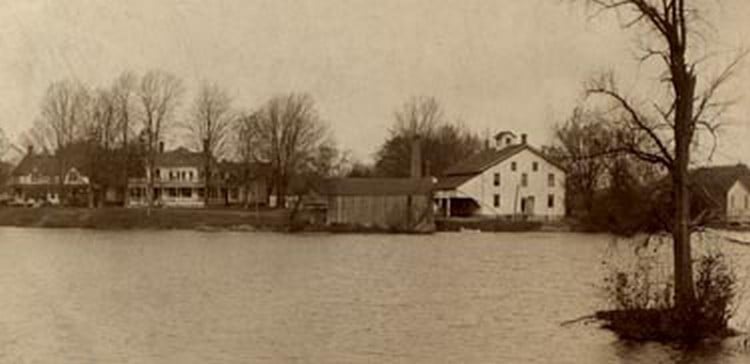
I found a photograph of Sodus Center that I’m pretty sure was taken sometime before my grandmother was born. The mill is on the right, squared and solid, with a little cupola on top. The houses along the far shore are white-painted, their porches facing the water. The trees are bare, the way they go in late winter before anything comes back. It’s a hamlet in the old sense, small, complete, self-contained. Everything it needed, right there around that water.
The pond is still there. The houses are still there, more or less. The mill is long gone.
I grew up in Sodus, which is maybe four miles from Sodus Center depending on which road you take. Close enough that, as a teenager, the orchards surrounding the mill pond were just a place we ended up on summer nights. Somebody’s older brother had a car, somebody had thought ahead enough to bring beer, and we’d sit on the bank and watch the water go dark as the light left. I didn’t know anything about the mill then. I didn’t think about what the place had been. I was seventeen. You don’t think about that at seventeen.
You think about it later.
A few weeks ago I was doing what I do… scrolling through an online auction at an hour when I should have been doing something else, when a listing stopped me cold.
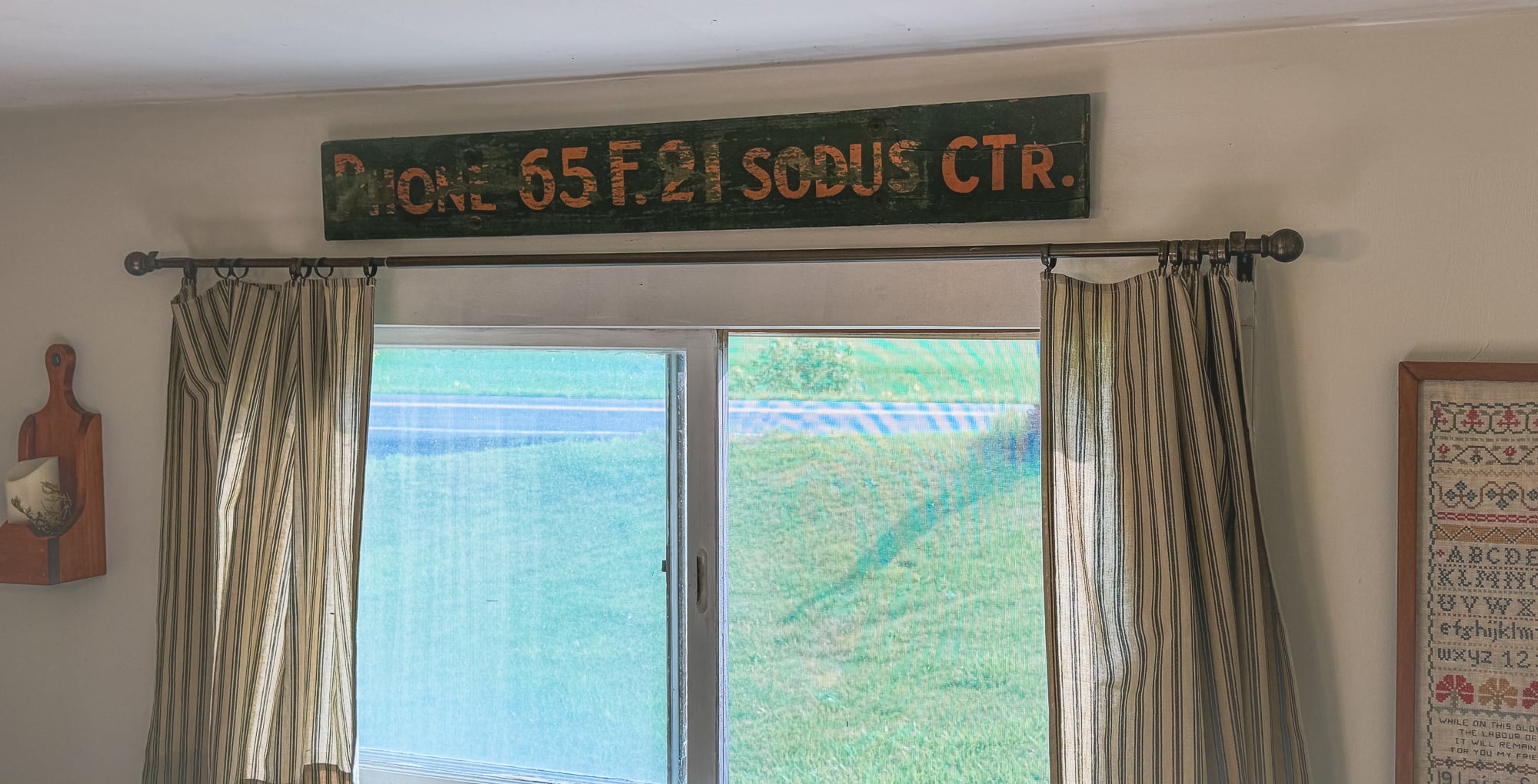
A telephone sign. The old kind, handpainted wooden shingle kind, the ones businesses used to mount outside when they were on the telephone exchange and they wanted you to know it. Green background, yellow lettering. And the exchange printed on it was Sodus Center.
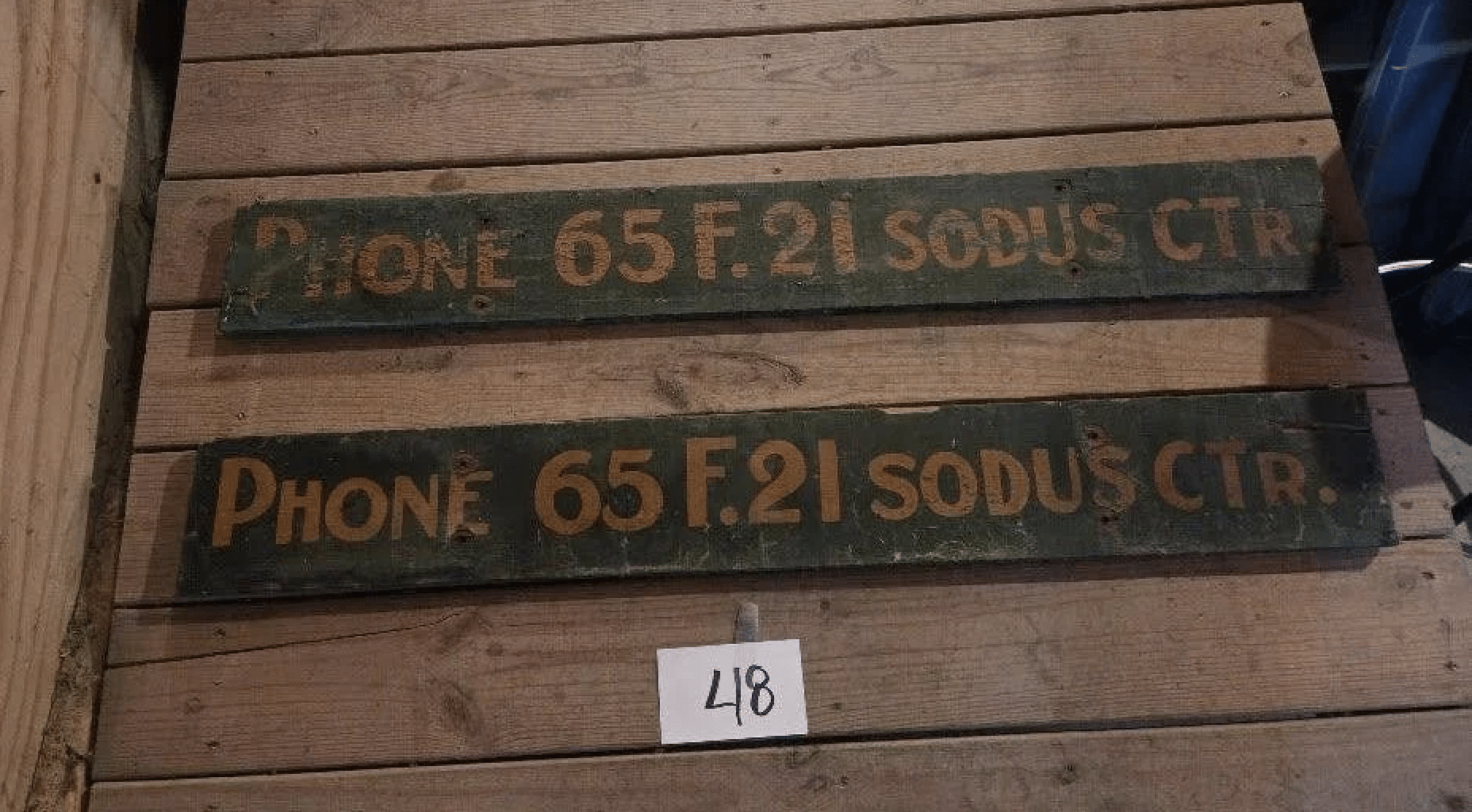
There were two of them, being sold as a lot.
I know something about these signs. I know they’re not common. The hand-painted wood ones are especially difficult to come across. They get repurposed, or lost when the buildings they were mounted on come down. I know that a sign from a specific small hamlet in Wayne County, New York is not something that turns up every day, maybe not something that turns up twice in a lifetime of looking. And I knew, reading the listing, that these signs came from the mill. The mill in my photograph. The mill by the pond where I sat with warm beer at seventeen and didn’t think about anything except how the water looked at dusk, and how I was sneaking in past curfew.
I wanted them, and like a reasonable adult I set a bidding ceiling for myself. A reasonable number. The kind of number I could justify without too much internal negotiation.
Then I bid past it.
Then I bid past that.
Then I stopped, because there’s a version of yourself you can become at an auction and it’s not always a version you are proud of. I watched the lot close one bid above my last bid. Someone else’s signs now. Someone else’s wall.
Here’s what I’ve been sitting with since then: I wanted those signs badly enough that losing them still stings a little. And I’ve been trying to figure out why, exactly, and whether it’s as simple as it seems.
Part of it is obvious. They were beautiful objects, good condition, clean graphics, the kind of thing that hangs on a wall and asks questions of everyone who sees it. Part of it is the collector’s particular sorrow, the one that attaches to things you recognize on sight as right, as yours, and then have to let go of.
But the part that interests me most is the Sodus Center part. The pond part. The seventeen-years-old-in-the-dark part.
The pond’s history had reached out and brushed against my own, and, in a small way, the person I became.
I write about this region because I’m from this region, and being from somewhere is not the same as knowing it. Half of what I do is learning the history of places I thought I already knew. Finding out that the ground I walked on had a whole life before me, and a whole life before that.
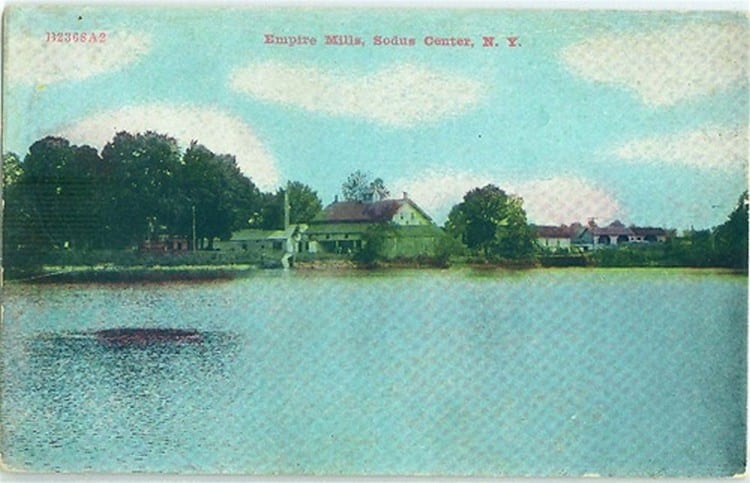
The mill by the pond was operating when that photograph was taken, serving the hamlet, connected to everyone around it. Somebody ran it. Somebody repaired the equipment, kept the books, and went home at the end of the day to one of those white-painted houses on the far shore. The phone sign was how they told the world: we’re here, you can reach us, this is the number.
I was probably feet from where that sign might have hung, on the bank of that same pond, and I had no idea.
The signs are somewhere else now. I hope they’re on a wall where someone sees them every day. I hope whoever bought them knows something about what they are, or will learn it.
For me, losing them turned out to be its own kind of finding. I know Sodus Center better for having wanted something that came from it badly enough to make an idiot of myself at an auction. I found the old photograph. I started looking into the mill’s history, into what the hamlet was at its working height, into what exchange phone numbers can tell you about the geography of a place and the era when everybody’s business was, in a small way, everybody’s business.
That’s the thing about old objects, even the ones that get away. Sometimes they’re more useful as a question than they would have been as an answer on your wall.
The mill pond is still there. I should drive out before summer gets too far along, stand on that bank again, and look at the water. See if it looks the same as it did at seventeen.
It won’t, of course. But neither will I.